
How to Help Children Develop Critical Thinking and Problem-Solving Skills: A Simple Guide from Top CBSE Schools in Hyderabad
Home / School / How to Help Children Develop Critical Thinking and Problem-Solving Skills: A Simple Guide from Top CBSE Schools in Hyderabad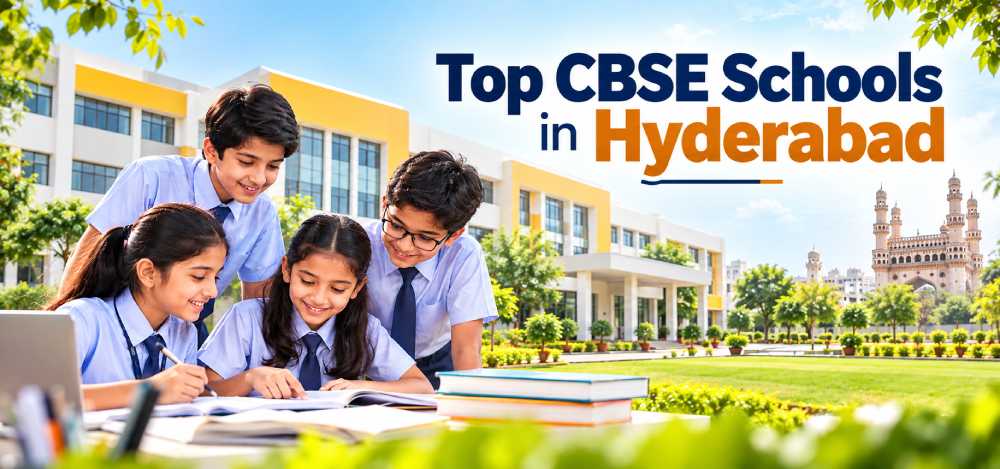
Overview
Parents can help children build critical thinking and problem-solving skills in four simple ways. Ask open questions. Let children try before stepping in. Turn daily chores into small puzzles. Make time for games like chess. Schools play a big part too. Good schools use group activities, labs and case-based questions instead of rote notes. The need is real. ASER 2023 found that only 43.3% of rural 14 to 18-year-olds could do a simple division sum, and only about 37% could work out a discount. CBSE now sets half of every board paper as competency-based questions. When comparing the top CBSE schools in Hyderabad, parents should ask how each school teaches children to think, not just to recall.
Introduction
At some point, most parents wonder why a child who scores well still gets stuck on a new kind of question. It is quite common to hear, “She knows the chapter, but she could not answer the case study.” The gap is usually not about knowledge. It is about thinking.
The good news is that thinking can be taught. Home and school each have a part to play. This guide explains why these skills matter, what the latest data says and which simple steps parents can start this week. It also shows what to look for when shortlisting the top CBSE schools in Hyderabad and nearby towns like Sangareddy.
What Are Critical Thinking and Problem-Solving Skills?
Critical thinking is the habit of asking “Why?” and “How do I know?” before accepting an answer. Problem-solving skills help a child spot a problem, try ideas, check what works and learn from mistakes.
The two go together. A child who thinks clearly solves problems faster. A child who solves problems often gets better at thinking.
What Does Critical Thinking Look Like in a 12-Year-Old?
It does not need big words. It shows up in small moments. A child checks whether a WhatsApp forward is true before sharing it. A student asks why an experiment failed instead of copying the right answer. A teenager compares two phone plans before picking one.
Why Do These Skills Matter So Much Now?
The situation has changed considerably over the last few years. Exams, colleges and jobs now reward thinking over memory. That is why parents comparing the top CBSE schools in Hyderabad now look past the toppers’ list and ask how children are taught.
Many Teenagers Struggle With Everyday Problems
Not everyone is aware how wide the gap is. National surveys show that many teenagers can read and count, but struggle to use those skills in daily life.
Table 1: How Indian teenagers handle everyday problems
|
Task |
Share who could do it |
Source |
| Measure a length when the object does not start at 0 cm | 39% | ASER 2023, ages 14 to 18 |
| Work out a discount | About 37% | ASER 2023, ages 14 to 18 |
| Work out a loan repayment | About 10% | ASER 2023, ages 14 to 18 |
| Do a 3-digit by 1-digit division | 43.3% | ASER 2023, ages 14 to 18 |
| Apply percentages to an everyday problem | About 28% | PARAKH 2024, Class 9 |
Sources: ASER Centre, ASER 2023 “Beyond Basics” (rural India); NCERT PARAKH Rashtriya Sarvekshan 2024, via iDream Education
It is interesting to observe that scores drop as soon as a task moves from the textbook to daily life. In practical terms, many young people can do the sum on paper but not at the shop counter.
Has Class 8 Maths Improved Over the Years?
Only a little. The share of rural Class 8 students who can do division has barely moved in six years.
Table 2: Rural Class 8 students who can do division (ASER)
|
Year |
2018 | 2022 |
2024 |
| Class 8 students who can divide |
44.1% |
44.7% |
45.8% |
Source: ASER 2024 (Rural), via iDream Education
Children who learn steps by heart often forget them. Parents looking at the top CBSE schools in Hyderabad can ask how maths is taught in Classes 6 to 8, because that is where the gap starts.
CBSE Exams Now Reward Thinking
CBSE has raised the share of competency-based questions in board papers step by step. These are case-based, source-based and assertion-reason questions that test whether a child can apply an idea.
Table 3: Share of competency-based questions in CBSE board exams
|
Exam year |
Class 10 | Class 12 | Source |
|
2022-23 |
About 40% |
About 30% |
Careers360 |
|
2024-25 |
50% |
50% |
Business Standard, Careers360 |
| 2025-26 | 50% | 50% |
MTG Learning Media |
The rest of each paper is 20% multiple-choice and 30% short and long answers
In simple words, half the board paper now checks whether a child can think through a new situation. Parents visiting the top CBSE schools in Hyderabad can ask to see a sample case-based lesson.
Employers Want Thinkers
From an employer’s point of view, the message is plain. The World Economic Forum surveyed over 1,000 large employers about the skills that matter most.
Table 4: Top five core skills employers want (2025)
|
Rank |
Core skill |
|
1 |
Analytical thinking (seen as core by 7 in 10 companies) |
|
2 |
Flexibility, agility and bouncing back from setbacks |
|
3 |
Leadership and social influence |
|
4 |
Creative thinking |
|
5 |
Motivation and self-awareness |
Source: World Economic Forum, Future of Jobs Report 2025. Employers also expect 39% of core skills to change by 2030
There is little doubt that a child who learns to think today will find it easier to learn new things later.
How Can Parents Build These Skills at Home?
Parents do not need special training. Small daily habits work best.
Ask Open Questions
Swap “What did you learn today?” for “What surprised you today?” or “How else could you solve that?” Open questions push children to explain, not just recall.
Let Them Struggle a Little
It is tempting to jump in with the answer. Wait a minute instead. A little struggle builds patience and confidence. Give a hint, not the full solution.
Turn Daily Life Into Puzzles
Ask a child to plan the grocery list within a budget, find the better discount or work out the quickest route to a relative’s house. Children learning problem-solving skills this way remember them for longer, because the problem feels like their own.
Simple Activities by Age
Table 5: Easy home activities that build thinking skills
|
Age |
Try this |
Skill it builds |
| 6 to 8 years | Jigsaws, building blocks, “what if” stories | Reasoning and patience |
| 9 to 11 years | Board games, a small weekly budget, float-or-sink tests in a bucket | Planning and testing ideas |
| 12 to 14 years | Chess, fact-checking a news forward, comparing phone plans | Logic and judging information |
| 15 to 16 years | Friendly debates, planning a family trip, case-based past papers | Building an argument and making decisions |
Source: editorial suggestions for parents
What Should Parents Look For in a School?
From a parent’s point of view, a school shapes how a child spends six or seven hours a day. The best CBSE schools in Hyderabad usually offer:
- Science labs where students run their own experiments
- Group activities and projects in every subject
- Regular practice with case-based questions
- Chess, debates and quiz clubs
- Smart classrooms used for discussion, not just slides
- Counselling support for exam stress and career choices
Families in and around Sangareddy do not always need to travel into the city for this. Some CBSE schools in Sangareddy offer the same mix.
Why Does MNR School of Excellence, Sangareddy Stand Out?
MNR School of Excellence, Sangareddy is a CBSE school at Fasalwadi on Narsapur Road. It has run CBSE classes since 2008 and belongs to the MNR Educational Trust. Here is what makes it a strong choice for thinking skills.
A 50-Year Legacy
The MNR Educational Trust began with one small school in Hyderabad in 1974. It now runs 76 institutions with around 48,000 students in India and the UAE. The group has won Best Management and Best Institution awards from the Government of India and the Government of Andhra Pradesh. The MNR legacy page tells the full story.
Award-Winning Group Activity-Based Teaching
Students learn in teams. They discuss, plan, test and present. Every child gets a voice, and quieter children slowly find their confidence. This award-winning method builds critical thinking every day and grooms strong individual personalities. The curriculum page explains how progress is tracked through report cards and portfolios.
Tech-Enabled Classrooms and Labs
Lessons come alive on a Smart Board. The Physics Lab and Chemistry Lab let students test ideas and see results for themselves. A Language Lab builds clear speaking, and the Resource Centre supports research for projects. See the smart classes and science labs pages.
Life-Enriching Learning Beyond Books
Chess, Arts and Crafts, Dance Training, Sports and Games, Yoga and Self-Defence are part of school life. Each one trains the mind in a different way. Guest lectures bring experts who show students how people solve problems at work.
Table 6: How MNR School of Excellence, Sangareddy builds thinking skills
|
Facility or activity |
Thinking skill it builds |
| Physics Lab and Chemistry Lab | Testing ideas and reading results |
| Chess | Planning ahead and logical thinking |
| Group activities and Resource Centre | Research, teamwork and weighing different views |
| Language Lab and Guest Lectures | Explaining ideas clearly and asking good questions |
| Arts and Crafts, Dance Training | Creative thinking |
| Yoga, Self-Defence, Sports and Games | Focus, calm decisions under pressure |
Source: MNR Schools (CBSE) official website and school brief
Conclusion
Critical thinking and problem-solving are not extra subjects. They are the base for board exams, entrance tests and later jobs. The data shows a clear gap, but small habits at home and the right school can close it steadily.
For parents shortlisting the top CBSE schools in Hyderabad and Sangareddy, a few questions say a lot. Do children experiment? Do they work in teams? Do they get time for chess, sport and art? MNR School of Excellence, Sangareddy ticks these boxes, backed by five decades of MNR experience. Parents can read about the admission process or call +91 98499 84837 to book a campus visit.
Frequently Asked Questions
Critical thinking is the habit of asking "why" and "how do I know" before accepting an answer. It helps children judge information, spot mistakes and make sensible choices.
Problem-solving skills help a child spot a problem, try different ideas, check what works and learn from mistakes. They are useful in exams, games and daily life.
Ask open questions, let children try before helping, turn chores like shopping into small puzzles and make time for games like chess and building blocks.
Children can start as early as 3 or 4 with puzzles and simple choices. The skills grow fastest when practice continues steadily through Classes 6 to 10.
In 2025-26 CBSE board papers, 50% of marks come from competency-based questions. These questions test whether students can apply ideas to new situations, which needs critical thinking.
Yes. Chess teaches children to plan ahead, think about their opponent's moves and learn from losses. These habits carry over to maths and science problems.
They use group activities, labs, projects, case-based questions, debates and clubs like chess. They also give counselling support so children can think clearly under pressure.
There is no single rule. Screens that make children create, plan or solve problems are better than endless scrolling. Parents can agree limits and keep weekends for outdoor play.
It follows the CBSE curriculum. The school is at Fasalwadi on Narsapur Road in Sangareddy and is part of the MNR Educational Trust, which began in 1974.
The school offers Smart Board classrooms, a Physics Lab, a Chemistry Lab, a Language Lab and a Resource Centre. Students also take part in Chess, Arts and Crafts, Dance Training, Sports and Games, Yoga, Self-Defence and guest lectures.
Parents can call +91 98499 84837 or email hmsrd.mnr@gmail.com. They can also read the admission process on the MNR Schools (CBSE) website or visit the contact page.
The World Economic Forum's Future of Jobs Report 2025 lists analytical thinking as the top core skill, followed by flexibility, agility and bouncing back from setbacks, and then leadership and social influence.
Related Blogs
From Nursery to Class 10: A Journey of Growth at the Top CBSE School in Sangareddy
Every parent dreams of giving their child the best possible start in life. From the…
10 Smart Parenting Tips for School-Age Children
A child today grows up in a world that moves quickly. Classrooms are changing, learning…

Importance of Sports and Extracurricular Activities in Schools
A school day does not end when the last bell rings. In many ways, it…

Top 10 Skills Children Should Develop Before Entering a Primary School in Hyderabad
If we visit some best-known primary schools in Hyderabad, some common sweeter moments, like a…

Getting Excited to Know the JEE Advanced 2026 Result? Explore This Complete Guide!
The JEE Advanced Result 2026 is not just a number on a screen — it…

How to Choose the Right School for Your Child in BHEL, Hyderabad
Choosing the right school for your child is one of the most important decisions you…